Explore how VAT reclaims work, what expenses qualify, and the practical steps to claim back VAT correctly for your business.
VAT is a major part of running a business in the UK but many business owners don’t realise they can often reclaim some of it.
Knowing how to claim back VAT can reduce your costs and help keep your business compliant with HMRC’s rules. This guide breaks down everything you need to know from eligibility to common mistakes and how to avoid them.
When Can You Claim Back VAT?
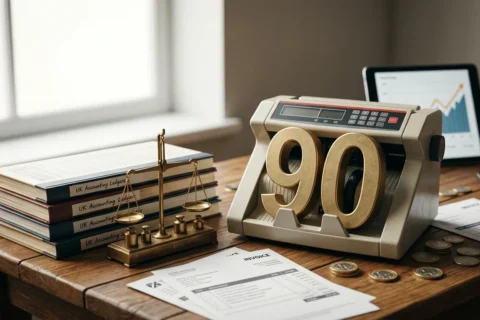
If your business is VAT-registered (which is required if your taxable turnover exceeds £90,000) and you’re making purchases for business use, then yes you can typically claim VAT back.
The VAT you pay on goods or services used for business (known as input tax) can usually be reclaimed from HMRC. This ensures the VAT doesn’t become a direct cost to your company.
However, there are exceptions:
- You can’t claim VAT on personal purchases.
- You can’t reclaim VAT on client entertainment, most car purchases, or supplies that are VAT-exempt.
Why Reclaiming VAT Matters
Claiming back VAT improves your cash flow and helps lower your operating costs, a key benefit for small businesses and sole traders managing tight budgets.
In some cases, you may even be due a VAT refund from HMRC if your input tax exceeds your output tax. That extra cash can make a real difference to your business.
When VAT Claims Are Allowed
- Business purchases: Office supplies, equipment, stock, and travel expenses that are for business use.
- Vehicles: VAT recovery depends on the type of vehicle and how it is used. For a car, you can normally reclaim all the VAT on purchase only where it is used exclusively for business and is not available for private use, subject to specific exceptions such as qualifying taxis, driving-instruction vehicles and self-drive hire. Where a car is leased and there is private use, businesses can normally reclaim 50% of the VAT on the leasing charge, subject to the normal VAT rules and any partial exemption restrictions.
- Staff travel and subsistence: VAT on staff accommodation and meals (while away on business) can be reclaimed. But client entertainment is excluded.
- Contracted services: If you hire VAT-registered contractors for business use and have valid VAT invoices, you can claim VAT on those services.
- Pre-registration expenses: If you’ve only recently registered for VAT, you may still be able to reclaim VAT on:
- Goods bought within the last 4 years (as long as you still have them and they’re used in your business)
- Services received within the last 6 months before registration (if directly related to taxable activities)
How Much VAT Can You Reclaim?
You can generally reclaim the full VAT amount if:
- The purchase is 100% for business use
- It relates to taxable supplies
- You have a valid VAT invoice
If a purchase is for both business and personal use, you can only reclaim the business-use proportion.
For leased vehicles used for both purposes, you can usually reclaim 50% of the VAT.
Make sure you keep proper documentation HMRC will expect clear records and justification for any mixed-use calculations.
How to Claim Back VAT: Step-by-Step
Claiming VAT is straightforward when you follow these steps:
1. Keep Proper Records
Maintain a VAT account that shows:
- VAT charged (output tax)
- VAT paid (input tax)
- Keep all valid VAT invoices and receipts. These must show the supplier’s VAT number, and the details of goods/services purchased.
2. Submit Your VAT Return
VAT returns are usually filed every three months. You’ll declare:
- Output tax (what you’ve charged)
- Input tax (what you’ve paid)
If you’ve paid more VAT than you’ve charged, you’ll be due a refund.
3. Reclaim VAT on the Return
Enter the total reclaimable VAT in Box 4 of your VAT return. HMRC will then either deduct this from your VAT bill or issue a refund.
4. Stick to the Deadlines
VAT returns are normally due one month and seven days after your VAT period ends. Late submissions can lead to penalties.
Common Mistakes to Avoid
VAT reclaims can be tricky. Watch out for these pitfalls:
- Claiming VAT on personal expenses: Only claim VAT for business-related costs.
- Getting car VAT rules wrong: You can’t claim VAT on a purchased car unless it’s used exclusively for business. For leased vehicles, 50% of VAT is typically recoverable. But full VAT recovery requires no private use and strict evidence.
- Missing or invalid VAT invoices: Without a valid invoice, your claim may be rejected. The invoice must include key details like supplier name, VAT number, and the VAT amount.
Need help with MTD compliance? See our guide on Making Tax Digital for VAT.
How Far Back Can You Claim VAT?
If you have recently registered for VAT, qualifying pre-registration VAT can normally be reclaimed on:
Goods: purchased up to 4 years before your VAT registration date, provided they are still on hand at registration and meet the normal VAT recovery rules.
Services: supplied within the 6 months before your VAT registration date, provided they relate to the taxable business activities covered by your registration.
Different rules can apply to certain capital items, exempt activities and non-business use. Pre-registration VAT should normally be included on the first VAT return you are required to submit.
Can You Reclaim VAT on International Purchases?
The treatment depends on whether you paid UK import VAT or VAT charged by another country.
Imports into the UK: UK import VAT can normally be reclaimed where the normal input-tax conditions are met. Your evidence may include a C79 import VAT certificate or the appropriate postponed import VAT accounting records, depending on how the import was accounted for.
VAT charged in another country: Foreign VAT is not normally reclaimed as UK input tax on your UK VAT return. You may instead need to use the refund procedure operated by the country that charged the VAT. The eligibility rules, deadlines and evidence requirements vary by country.
Do not include foreign VAT in Box 4 of a UK VAT return unless the UK VAT rules specifically permit it.
Can Sole Traders Claim VAT Back?
Yes, as long as you’re VAT-registered and your purchases are for business use.
Here’s what to keep in mind:
- Exclusive business use: Only claim VAT on the business-use portion of mixed-use items.
- Accurate record keeping: Maintain detailed records and VAT invoices.
- Responsibility: Unlike limited companies, sole traders are personally liable for VAT — so errors in your return can impact you directly.
Using accounting software like XERO or QuickBooks can simplify this and keep you compliant.
Pre-Registration Claims for Sole Traders
If you registered for VAT recently:
- You can reclaim VAT on goods from up to four years ago
- You can reclaim VAT on services from up to six months ago
These purchases must support your current VAT-taxable business activity and must not have been for personal use.
Final Thoughts from Accounting People
Claiming back VAT doesn’t need to be complicated — but it does need to be accurate.
By understanding which expenses qualify, keeping valid records, and submitting returns correctly, your business can reclaim as much VAT as possible — boosting your cash flow and helping you grow.
Stay Compliant, Save Money — with Accounting People
Need help reclaiming VAT or staying on top of your returns?
Book a free consultation with our VAT experts today — we’ll guide you through the rules, help maximise your claim, and take the stress out of compliance.
Or stay updated with VAT tips, MTD changes, and business advice —
Subscribe to our newsletter and get expert insights delivered straight to your inbox.
Let’s make tax work for your business.