Simple Assessment can feel confusing when a letter from HMRC arrives unexpectedly, especially if you do not usually complete a tax return. One minute your tax seems to be handled automatically through PAYE or your pension. The next, HMRC says you owe extra Income Tax and need to pay a bill directly.
The good news is that a Simple Assessment tax bill does not always mean you have done anything wrong. It usually means HMRC believes you have underpaid Income Tax and that the amount cannot be collected in the usual way through your wages, pension or tax code.
But you should not ignore it.
You should check the letter carefully, make sure the income figures are correct, understand how HMRC calculated the bill, and take action before the deadline. If the letter is wrong, you normally need to challenge it quickly. If it is correct, you need to pay it on time to avoid interest, further action or unnecessary stress.
At Accounting People, we help individuals, pensioners, directors, landlords, freelancers and small business owners understand HMRC letters, tax calculations and payment obligations. We support clients across London, including Harrow, Edgware, Stanmore, Wembley, Watford and Middlesex, as well as people across the UK who need clear online tax support.
Need help checking an HMRC tax bill? Speak to Accounting People before you pay a bill you do not fully understand.
A Clear Answer for UK Taxpayers
Simple Assessment is a way for HMRC to collect Income Tax without asking you to complete a full Self Assessment tax return.
HMRC may use it when it already has enough information to calculate the tax it believes you owe. This information may come from your employer, pension provider, bank, building society, the Department for Work and Pensions, or other income records HMRC receives.
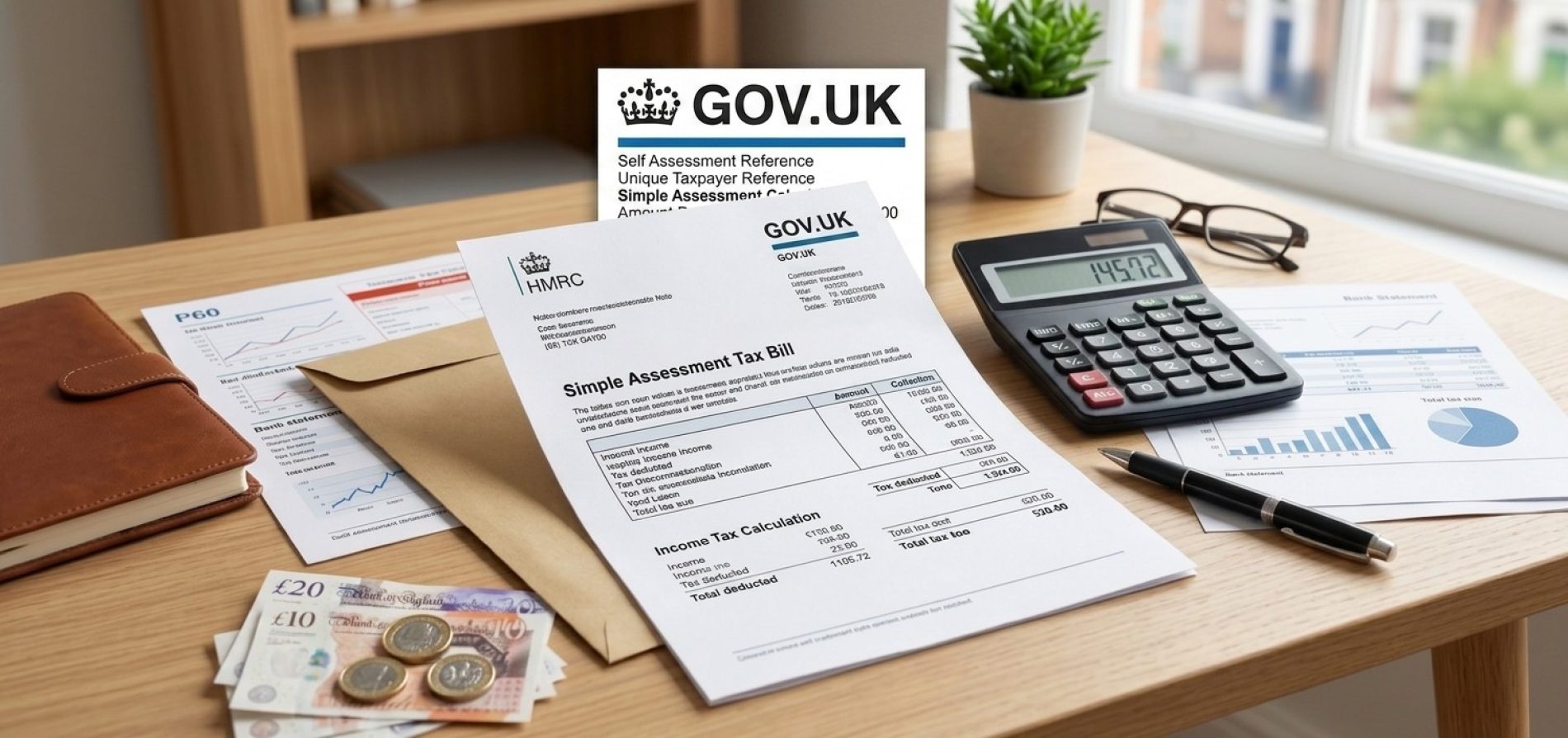
Instead of asking you to file a tax return, HMRC sends you a letter. This letter should explain how much tax HMRC thinks you owe, why you owe it, and how to pay.
HMRC is saying: “Based on the information we hold, you owe this amount of Income Tax. Please check it and pay by the deadline.”
That sounds straightforward, but many people find the letter worrying because they were not expecting a tax bill. This is especially common for pensioners, people with more than one income source, people with savings interest, and individuals whose tax code did not collect enough tax during the year.
The most important point is this: check the calculation before you pay.
Why HMRC Has Sent You a Tax Bill
You may receive this type of HMRC letter if HMRC believes you have an unpaid Income Tax that cannot be collected automatically.
This can happen for several reasons. You may owe more tax than HMRC can recover through your PAYE tax code. You may owe tax on State Pension income. You may have savings interest, pension income, employment income, benefits or other income that has not been taxed correctly.
Common reasons include:
- your tax code did not collect enough tax
- you received taxable State Pension income
- you had more than one pension
- you had more than one job
- your savings interest pushed you over your tax-free allowance
- HMRC received updated income information after the tax year ended
- you owed more tax than could be collected through PAYE
- you are not in Self-Assessment, but HMRC still believes tax is due
Receiving an HMRC tax bill does not automatically mean you made a mistake. Sometimes the issue comes from timing, pension income, tax code changes, savings interest, or HMRC receiving information after the tax year has ended.
However, HMRC calculations can be wrong. That is why you should always check the details before paying.
What the Letter Usually Includes
The letter should explain the tax year involved, the income HMRC used in the calculation, the amount of tax already paid, and the amount HMRC says is still due.
It should also show the payment deadline, payment reference details, and information about what to do if you think the calculation is wrong.
Before you do anything else, check that the letter includes:
- the correct tax year
- your correct personal details
- your income sources
- tax already deducted through PAYE
- the tax HMRC says is unpaid
- the payment deadline
- details for contacting HMRC
- your payment reference
Keep the letter safe. You may need it if you contact HMRC, ask an accountant to check the figures, or make a payment.
Simple Assessment vs Self Assessment
Simple Assessment and Self Assessment are not the same.
Self Assessment is a tax return system. People use it when they need to report income, claim certain reliefs, declare business profits, report rental income, pay Capital Gains Tax or deal with more complex tax affairs.
Simple Assessment is different. You do not normally complete a full tax return. HMRC calculates what it believes you owe and sends you a letter asking for payment.
The key difference is responsibility for the calculation.
With Self Assessment, you or your accountant prepare the tax return and submit your figures to HMRC. With Simple Assessment, HMRC prepares the calculation using information it already holds.
That does not mean you should simply accept the figure without checking it. You still need to make sure the income, allowances, tax code details and calculation look right.
If you are self-employed, a landlord, a company director with additional income, or someone with more complicated tax affairs, you may still need Self Assessment tax return support instead of relying on HMRC’s calculation.
How HMRC Works Out the Amount You Owe
HMRC normally starts with the income information it holds about you.
This may include employment income, pension income, taxable State Pension, taxable benefits, savings interest and tax already paid through PAYE. HMRC then compares the tax that should have been paid with the tax already collected.
If HMRC believes there is a shortfall, it sends a tax bill.
The calculation may include:
- employment income
- pension income
- State Pension
- taxable benefits
- savings interest
- tax already paid
- your Personal Allowance
- your tax code
- any tax still due
You should check every figure against your own records. Look at payslips, P60s, P45s, pension statements, bank interest summaries, tax code notices and previous HMRC letters.
A small error in income, pension details, tax already paid or allowances can change the final bill.
What to Check Before You Pay
Before paying, take time to check the calculation carefully. Do not assume the bill is correct just because it came from HMRC.
Check these points:
- Is your name correct?
- Is your National Insurance number correct?
- Is the tax year correct?
- Are all income sources listed accurately?
- Has HMRC included income twice?
- Has HMRC missed tax already deducted through PAYE?
- Is your pension income correct?
- Is your State Pension figure correct?
- Has HMRC used the right Personal Allowance?
- Has your tax code been applied properly?
- Does the savings interest figure match your bank records?
- Has HMRC included income that does not belong to you?
This matters because many people pay first and check later. That can create extra work if the bill turns out to be wrong.
If the bill appears to relate to PAYE or pension income, it is also worth checking whether your tax code is correct.
What to Do If the Calculation Looks Wrong
If the calculation looks wrong, act quickly.
Do not ignore the letter and hope the issue goes away. HMRC will still expect a response or payment unless the calculation is corrected.
Start by comparing HMRC’s figures with your own documents. If you can clearly see the problem, gather evidence before contacting HMRC.
Useful documents may include:
- P60
- P45
- payslips
- pension statements
- bank interest certificates
- tax code notices
- previous HMRC letters
- Personal Tax Account records
- Self Assessment records, if relevant
Common errors include duplicated income, missing tax already paid, incorrect pension figures, wrong tax code information, or income being included for the wrong tax year.
Explain the issue clearly and keep a record of when you contacted HMRC. If an accountant contacts HMRC on your behalf, they can help present the figures properly and reduce the risk of confusion.
Why Timing Matters
Timing matters because HMRC usually expects you to respond within a set period if you think the calculation is wrong.
If you miss the challenge window, the process may become harder. You may still be able to raise issues, but it is always better to act quickly while the letter is fresh and your records are easy to find.
This is one of the main reasons people speak to an accountant. A professional can review the calculation, compare it with your income records and explain whether the bill appears reasonable.
If you are unsure, do not leave it until the payment deadline. Early advice can prevent unnecessary stress.
How to Pay HMRC Safely
If the bill is correct, you need to pay HMRC by the deadline shown in the letter.
HMRC normally allows several payment methods, including online payment, bank transfer, and cheque. The letter should include payment details and a reference number. Use the correct reference so HMRC can match the payment to your account.
Before paying, check that you are using an official GOV.UK or HMRC route. Tax scams are common, especially when people receive unexpected messages about refunds, unpaid tax or urgent payment demands.
A genuine HMRC tax bill usually arrives by letter or appears in your Personal Tax Account. Be careful with texts, emails, phone calls, or links that ask for personal or banking details.
If you are unsure whether the letter is genuine, check through official HMRC channels or ask a tax professional before making payment.
What Happens If You Ignore the Letter
Ignoring an HMRC tax bill is rarely a good idea.
If the bill is correct and you do not pay on time, HMRC may charge interest and could take further action to collect the amount due.
If the bill is wrong and you do not challenge it, HMRC may continue treating the amount as payable.
Even if you cannot afford to pay in full, you should still take action. You may be able to discuss payment options with HMRC if you cannot pay on time.
If you disagree with the calculation, tell HMRC why. If you agree with the bill but cannot pay, contact HMRC before the deadline where possible.
P800 vs Simple Assessment: What’s the Difference?
A P800 tax calculation and a Simple Assessment letter are related, but they are not exactly the same.
Both can be sent when HMRC believes you have paid too much or too little tax. A P800 often explains a tax overpayment or underpayment for people taxed through PAYE. It may tell you that you are due a refund or that you owe tax.
A Simple Assessment letter is used when HMRC wants you to pay a tax bill directly.
The practical difference for many people is this: a Simple Assessment letter normally requires you to make a payment by a stated deadline.
If you receive either type of letter, check the calculation carefully. Tax code errors, employment changes, pension income and savings interest can all affect the figures.
Who Commonly Receives These HMRC Letters?
These letters can affect a range of UK taxpayers.
They are common among people whose tax is usually handled automatically but where HMRC later finds a shortfall.
This may include:
- pensioners with State Pension income
- people with private pension income
- employees with more than one job
- people with taxable benefits
- individuals with savings interest
- people whose tax code changed during the year
- people who owed too much for PAYE to collect
- individuals who are not required to file a Self Assessment return
For example, a retired person may receive State Pension and private pension income. If not enough tax has been collected through the private pension, HMRC may issue a bill.
Another example is someone with employment income and significant bank interest. If the interest creates extra tax that has not been collected through PAYE, HMRC may ask for payment directly.
When You Should Speak to an Accountant
You do not always need an accountant for an HMRC tax bill. If the figures are clear, the amount is small and you agree with the calculation; you may simply pay the bill yourself.
However, professional help is sensible if:
- the bill is larger than expected
- the calculation is unclear
- you think HMRC has included the wrong income
- you have more than one pension or job
- you receive rental income
- you have self-employed income
- you are unsure whether you should be in Self Assessment
- you have received several HMRC letters
- you cannot match the figures to your records
- you are worried about missing a deadline
- you need help communicating with HMRC
An accountant can help you check the calculation, identify possible errors, understand your tax position and decide what to do next.
This is especially useful if the letter is part of a wider tax issue, such as incorrect tax codes, missed Self Assessment registration, undeclared income, pension tax, rental income, dividend income or company director income.
How Accounting People Can Help
Accounting People helps individuals and business owners understand HMRC tax letters and deal with tax bills properly.
We can review your letter, compare HMRC’s figures with your records, explain whether the tax bill looks right and advise on the next steps. If the calculation appears incorrect, we can help you understand what evidence may be needed before contacting HMRC.
We also help with related personal tax matters, including Self Assessment, tax code issues, personal tax planning, rental income, dividend tax, Capital Gains Tax, bookkeeping and support for small business owners.
We support clients across London, Harrow, Edgware, Stanmore, Wembley, Watford and Middlesex, as well as people throughout the UK who prefer online support.
Our aim is simple: clear advice, less stress and better confidence when dealing with HMRC.
If you keep receiving unexpected HMRC bills, personal tax advice can help you understand your income, allowances and tax position before the next letter arrives.
Common Mistakes to Avoid
HMRC letters can be easy to misunderstand, especially when they arrive unexpectedly.
Avoid these common mistakes:
- paying without checking the calculation
- ignoring the letter because you think PAYE covers everything
- assuming the letter is fake without checking properly
- missing the deadline to challenge an incorrect bill
- using the wrong payment reference
- failing to update HMRC about income changes
- forgetting to check pension and savings interest figures
- confusing Simple Assessment with Self Assessment
- not keeping a copy of the letter and payment confirmation
A few minutes of checking can prevent bigger problems later.
If you are unsure, ask for help before paying. It is better to check first than to fix a mistake after money has already left your account.
Using the Letter to Prevent Future Tax Problems
An unexpected tax bill often highlights a wider tax planning issue.
If HMRC has sent you a bill, it may mean your tax code, income sources or allowances need closer attention. This is especially true if your income changes from year to year or you receive pension income, employment income, savings interest or dividend income.
Good tax planning can help you understand what is likely to happen before the next letter arrives. It can also help you avoid repeated underpayments.
For example, you may need to:
- check your tax code
- review pension income
- understand savings interest
- plan for dividend tax
- register for Self Assessment
- update HMRC about income changes
- keep better records of tax already paid
The goal is not just to deal with the current bill. It is to understand why it happened and reduce the chance of another surprise later.
Final Thoughts: Do Not Ignore an HMRC Tax Bill
A Simple Assessment letter is HMRC’s way of collecting Income Tax where it believes tax is due and cannot be collected automatically.
The letter may be correct, but you should still check it carefully. Make sure the income figures, tax paid, allowances and calculation all make sense. If something looks wrong, act quickly. If the bill is correct, pay by the deadline or speak to HMRC if you cannot pay on time.
Simple Assessment is meant to make tax collection easier, but it can still feel stressful when you do not understand the figures.
Need help checking an HMRC tax bill? Contact Accounting People today for clear, practical tax advice from a UK-based team that understands HMRC, personal tax and small business accounting.