You file your Self Assessment tax return. You expect to pay last year’s tax bill. That part makes sense.
Then HMRC shows another amount.
A first payment on account.
Then another one due in July.
For many sole traders, landlords, freelancers and side hustlers, this is the moment Self Assessment suddenly feels confusing. You thought you were paying tax for the year that had already ended. Instead, HMRC is also asking you to pay something towards the next tax year.
This Payments on Account Explained UK guide breaks down what payments on account are, why HMRC asks for them, when they are due, who has to pay them, and what you can do if your income is expected to fall.
The short version is this: payments on account are advance payments towards your next Self Assessment bill. They are designed to spread your tax across the year, but they can still create cash flow pressure if you are not expecting them.
That is why understanding them early matters.
What Are Payments on Account?
Payments on account are advance payments towards your next Self Assessment tax bill.
They usually apply when HMRC expects you to owe tax again in the following year. Instead of waiting until the next January for the whole amount, HMRC asks you to pay part of it in advance.
For self-employed people, payments on account can also include Class 4 National Insurance.
The easiest way to think about it is this:
Your normal tax return works out the tax you owe for the year that has already ended.
Payments on account are HMRC’s way of collecting tax towards the next year.
This is why the January Self Assessment bill can feel higher than expected. You may not only be paying the tax you owe for the previous tax year. You may also be paying the first instalment towards the next one.
If you are unsure what your Self Assessment bill includes, Accounting People can help you understand the figures through our Self Assessment accountant service.
When Are Payments on Account Due?
Payments on account are usually due in two instalments:
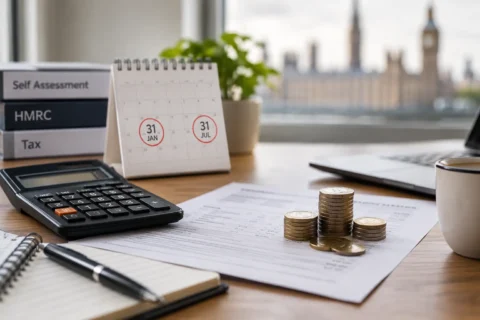
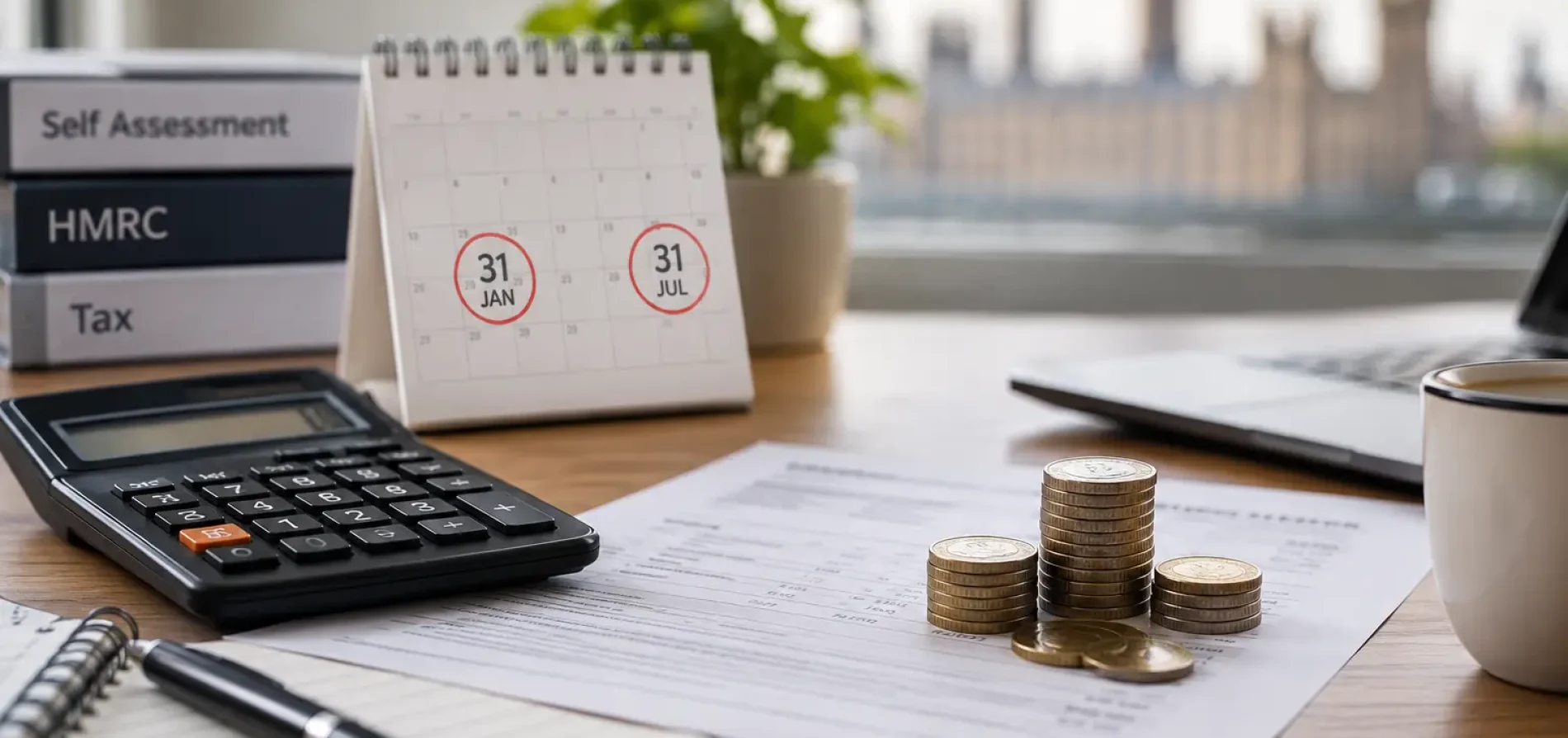
- 31 January — first payment on account
- 31 July — second payment on account
The 31 January payment often comes at the same time as your balancing payment. This is the amount still due for the tax year you have just filed.
For example, for the 2025/26 tax year, your online tax return and balancing payment are due by 31 January 2027. If payments on account apply, your first payment on account for the following tax year may also be due on the same date. The second payment on account would then be due by 31 July 2027.
This is why January can feel painful. It is not always one payment. It can be two things happening at once:
- The final tax owed for the previous tax year
- The first advance payment towards the next tax year
For more information about filing and payment dates, read our Tax Return Deadline UK guide.
Who Has to Make Payments on Account?
Not everyone who files a Self Assessment tax return has to make payments on account.
You usually need to make payments on account unless one of these applies:
- Your previous Self Assessment tax bill was less than £1,000
- More than 80% of your tax was already collected outside Self Assessment, such as through PAYE
This means payments on account are common for:
- Sole traders
- Freelancers
- Landlords
- Business partners
- Consultants
- Side hustlers with growing income
- Company directors with untaxed income
- People with investment or dividend income not fully taxed at source
They are especially common when your income is not taxed automatically through PAYE.
For example, an employee may have most tax collected through their salary. But a sole trader usually receives income before tax, so HMRC collects the tax later through Self Assessment.
If you are self-employed and unsure whether payments on account apply, Accounting People’s Self Assessment tax returns for sole traders service can help you check what is due and when.
How Are Payments on Account Calculated?
Payments on account are usually based on your previous year’s Self Assessment tax bill.
Each payment on account is normally 50% of the relevant amount due through Self Assessment for the previous year.
Here is a simple example.
Your tax bill for 2025/26 is £4,000.
HMRC may ask you to make two payments on account for 2026/27:
- £2,000 by 31 January 2027
- £2,000 by 31 July 2027
Together, those two payments total £4,000, which is based on the previous year’s bill.
Then, when you file your 2026/27 tax return, HMRC compares what you actually owe with what you have already paid.
If your actual tax bill is higher than the payments on account, you pay the difference as a balancing payment.
If your actual tax bill is lower, you may have overpaid and could be due a refund or have the overpayment set against future tax.
Why Does the January Bill Feel So High?
The January bill often feels high because it can include more than one amount.
Let’s use another example.
Your Self Assessment tax bill for 2025/26 is £6,000. You have not made payments on account before.
By 31 January 2027, you may need to pay:
- £6,000 balancing payment for 2025/26
- £3,000 first payment on account for 2026/27
That means the total due by 31 January could be £9,000.
Then another £3,000 may be due by 31 July 2027.
This surprises many first-time Self Assessment taxpayers because they expect one tax bill, not an advance payment as well.
The system is not new, but it is easy to miss if nobody explains it properly. That is why filing early and planning ahead can make a big difference.
Are Payments on Account an Extra Tax?
No. Payments on account are not an extra tax.
They are advance payments towards your next tax bill.
This is an important point because many people see the January amount and think HMRC is charging them twice. In reality, HMRC is asking for tax towards the next year based on the previous year’s bill.
The issue is not that you are paying extra tax. The issue is timing.
Payments on account bring part of next year’s tax payment forward. This can create cash flow pressure, especially if your income changes from year to year.
For business owners, this is where tax planning matters. If you only think about tax in January, payments on account can feel like a shock. If you plan throughout the year, they become easier to manage.
Accounting People’s small business accountants can help business owners plan tax payments in advance instead of reacting at the deadline.
What If Your Income Goes Down?
This is one of the most important parts of payments on account.
If you expect your income or profits to be lower than the previous year, you may be able to ask HMRC to reduce your payments on account.
For example, your profits may fall because:
- You lost a major client
- You reduced your working hours
- Your business had a quieter year
- Your expenses increased
- You moved from self-employment into employment
- Rental income dropped
- You stopped a side hustle
- You had a one-off high income year that will not repeat
In these situations, paying the same amount as last year may not reflect your current position.
You can apply to reduce payments on account online through your HMRC account or by using form SA303.
However, be careful. If you reduce your payments too much and your final tax bill is higher than expected, HMRC may charge interest on the underpaid amount.
This is why it is better to reduce payments based on realistic figures, not guesswork.
Example: Reducing Payments on Account
Let’s say your 2025/26 tax bill was £8,000.
HMRC may ask for:
- £4,000 by 31 January 2027
- £4,000 by 31 July 2027
But in 2026/27, your business income falls and you expect your tax bill to be closer to £4,000.
In that case, you may ask HMRC to reduce each payment on account to £2,000.
That may be sensible if your estimate is accurate.
But if your final tax bill ends up being £7,000, you will have underpaid. HMRC may then charge interest on the shortfall.
So the key question is not simply, “Can I reduce it?”
The better question is, “What is a realistic estimate of my tax bill?”
Good bookkeeping makes this easier because you can see income and expenses during the year, not just after the year ends.
Accounting People’s cloud accountancy services can help you keep accurate records and make better tax decisions before the deadline arrives.
What Happens If You Cannot Pay?
If you cannot pay your Self Assessment bill or payments on account by the deadline, do not ignore it.
HMRC may charge interest and penalties for late payment. The longer the amount remains unpaid, the more stressful the situation can become.
You should check your HMRC online account, understand exactly what is due, and speak to HMRC as early as possible if you need support.
In some cases, you may be able to arrange a payment plan, often called a Time to Pay arrangement. This allows you to pay what you owe over time, subject to HMRC’s conditions.
An accountant can also help you understand whether the amount is correct, whether a reduction claim is reasonable, and whether your tax return has been prepared accurately.
The worst option is to leave it until HMRC starts chasing.
Payments on Account for Side Hustlers
Payments on account can also affect people with side hustle income.
For example, you may have a full-time job taxed through PAYE, but also earn income from freelancing, online selling, tutoring, content creation or consulting.
If your side income becomes large enough to create a Self Assessment tax bill, payments on account may apply in future years.
This can feel confusing because your salary tax may already be handled through PAYE. But side hustle income may still create a separate Self Assessment liability.
If you earn additional income alongside a job or another source of income, our Side Hustle Tax UK guide explains when side-hustle income may need to be reported to HMRC.
Common Mistakes With Payments on Account
Thinking It Is a Penalty
Payments on account are not a penalty. They are advance payments towards the next year’s tax bill.
Forgetting About the July Payment
Many people remember the January deadline but forget the second payment on account due in July.
Not Budgeting During the Year
If you do not set aside money for tax, January and July can become stressful.
Reducing Payments Without Evidence
You can ask HMRC to reduce payments, but reducing them too far can lead to interest if your final tax bill is higher.
Confusing Turnover With Profit
For self-employed people, tax is usually based on profit, not total sales. Accurate expense records matter.
Filing Too Close to the Deadline
If you file late in January, you may not have enough time to understand your bill, check the figures and arrange payment.
How to Plan for Payments on Account
The best way to manage payments on account is to plan before the deadline.
Here are practical steps:
- Keep monthly income and expense records
- Set aside money for tax as income comes in
- Review your profit during the year
- Check your HMRC online account before January
- File your tax return early
- Understand whether payments on account apply
- Review whether your income is likely to fall
- Speak to an accountant before reducing payments
- Do not ignore the July deadline
If you run a business, tax planning should be part of your normal cash flow planning. It should not only happen when the deadline is close.
Free Payments on Account Checklist
Before January or July, check:
- Have you filed your Self Assessment tax return?
- Does your HMRC account show payments on account?
- Is the amount based on last year’s tax bill?
- Has your income changed significantly?
- Do you need to reduce payments on account?
- Do you have evidence to support the reduction?
- Can you pay by the deadline?
- Have you planned for the second payment in July?
- Do you need help checking the calculation?
How Accounting People Can Help
Payments on account can be confusing, especially if your income changes or you are filing Self Assessment for the first time.
Accounting People helps sole traders, freelancers, landlords, directors, side hustlers and small business owners understand their Self Assessment bills clearly.
We can help you:
- Check whether payments on account apply
- Review your Self Assessment calculation
- Explain January and July payment deadlines
- Check whether reducing payments is sensible
- Prepare and file your tax return
- Improve bookkeeping for future tax planning
- Avoid last-minute surprises
Our aim is simple: help you understand what you owe, why you owe it, and how to stay compliant without unnecessary stress.
If your Self Assessment bill is higher than expected, speak to Accounting People before making changes or missing the deadline.
Final Thoughts
Payments on account can feel frustrating when you first see them, but they are easier to manage once you understand how they work.
They are not an extra tax. They are advance payments towards your next Self Assessment bill.
The key points are simple:
- Payments on account are usually due on 31 January and 31 July
- Each payment is normally half of your previous year’s tax bill
- They usually apply unless your previous bill was under £1,000 or most tax was already collected outside Self Assessment
- You may be able to reduce them if your income is expected to fall
- Reducing them too much can lead to interest
- Filing early gives you more time to plan
If you are unsure why HMRC is asking for payments on account, do not wait until the deadline. Getting advice early can help you avoid overpaying, underpaying or missing an important date.
Need help with Self Assessment payments on account? Contact Accounting People today for clear, practical tax support.